
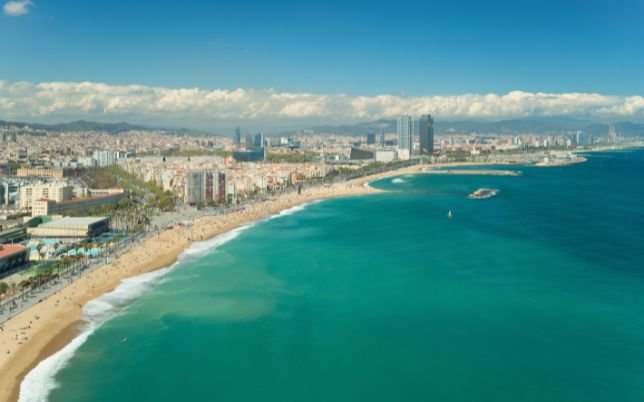
Barcelona is one of the few major European cities where you can visit the Sagrada Família in the morning and be in the water by noon. But the city’s beach isn’t the only option—nor is it always the best one. Here’s a guide to what to expect at each one, and when it’s worth heading out of the city.
The city's beaches: convenient, but not the best in Catalonia
Barcelona has nearly 5 km of urban coastline, spread across several adjacent beaches: Sant Sebastià, Barceloneta, Somorrostro, Nova Icària, Bogatell, Mar Bella, and Nova Mar Bella. They’re convenient because they’re just a short walk or one metro stop from downtown, with showers, lifeguards, and beach bars—but they’re also the most crowded, especially Barceloneta in July and August.
Barceloneta The best known and most crowded beach. It has a lively atmosphere and a good selection of paella and seafood restaurants right behind the sand, but during peak season it's hard to find a spot before 10 a.m.
Mar Bella It's a bit quieter than Barceloneta, with a nudist area at one end, and a younger, more athletic vibe (there's a sailing club, and you'll often see people playing beach volleyball).
Nova Icària The most family-friendly option among the city beaches: calm waters, easy access, and fewer crowds than Barceloneta—even in August.
The Real Problem with Urban Beaches
It’s not the sand or the water—it’s the crowds during peak season, and the fact that, since these are city beaches, they don’t have the «wild» cove or coastline look that many people expect from Spain. If this is your only day in Barcelona, any of the beaches listed above will do. If you have more time, the Catalan coast has much more to offer.
Sitges — the easiest getaway (40 minutes by train)
The most popular coastal town near Barcelona, with a direct train from Passeig de Gràcia or Sants (about 40 minutes, no car needed). It combines well-maintained urban beaches with a very photogenic whitewashed old town and excellent dining options. It’s also the premier LGBTQ+ destination on the Catalan coast, with a very open atmosphere year-round. Ideal for a full-day trip.
Costa Brava — picture-perfect coves (1–1.5 hours)
North of Barcelona, the Costa Brava is home to the coves you often see in Instagram photos: turquoise water, pine trees right up to the shore, and rocks. Tossa de Mar and Lloret de Mar are the most accessible by public transportation; Calella de Palafrugell and Tamariu, which are a bit quieter, practically require a car. If you’re looking for the typical «hidden cove,» this is the area—but it requires spending a full day away from Barcelona, not just an afternoon.
Costa Dorada — long, family-friendly beaches (1 hour)
To the south, toward Tarragona, the Costa Dorada has much longer beaches with finer sand than those in the city of Barcelona, and the waves are calmer. It’s the area best suited for families with young children, and it’s where Port Aventura is located if you want to combine a beach trip with a visit to a theme park.
City beach or day trip?
It depends on what you have planned for the rest of your trip:
- If you just want a few hours at the beach between cultural sightseeing stops → any city beach, preferably first thing in the morning
- If you have a whole day free and want something more «picture-perfect» → Costa Brava
- If you're looking for a charming town with a well-maintained beach and a great atmosphere, without having to worry about transportation → Sitges
- If you're traveling with children and want long, quiet beaches → Costa Dorada
When to Go
June and September are the best months to visit: the water is already (or still) warm, but without the crowds or the high prices of July and August. May is a good option if you don’t mind the water being a little cooler. Outside of that window (October through April), the city beaches are still pleasant for strolling, although almost no one goes swimming.
At VenturPass, we're putting together guides and bookable experiences for day trips from Barcelona—check back soon, or follow us for updates.