
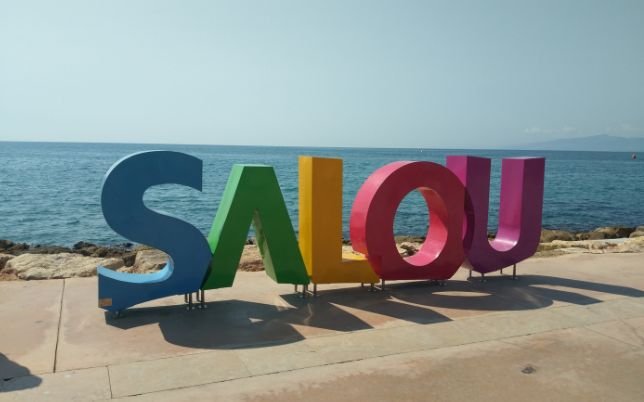
Salou is easy to describe: about ten kilometers of coastline, a boardwalk that fills up starting at 7:00 p.m., and a nightlife scene that’s hard to miss. It’s the place on the Costa Dorada where you come to enjoy the beach by day and the nightlife by night without having to get in the car at all.
That makes it a destination with a very distinct character. Many people love it, while others just don't get it. This guide is here to help you figure out which of the two you are before to make a reservation.
A destiny lived on the streets
The center of Salou revolves around Passeig Jaume I, the tree-lined promenade that runs along Platja de Llevant. It’s flat, wide, and you can walk its entire length: in twenty minutes, you can go from one end of the harbor to the area around the light-up fountain, which serves as a gathering spot and offers a free show at night.
The practical result is that almost no one here uses their car once they've parked. The beach, dinner, and drinks are all within a ten-minute walk, and that's a big part of why people choose Salou.
Stores with holiday hours
Salou's retail scene is geared toward tourists, with all the pros and cons that entails. You'll find plenty of stores selling swimsuits, souvenirs, inflatables, and beachwear that stay open well into the night, especially along the promenade and on the streets leading up from it.
If you're looking for more conventional shopping, Salou's shopping district has the basics, but for a more extensive selection, head to Tarragona or the nearby shopping centers, which are less than twenty minutes away by car.
Bars and Pubs with Music: Where's the Noise?
The heart of the nightlife is Carrer Carles Buïgas, the street that runs downhill from the upper part of the city to the illuminated fountain. That’s where you’ll find the pubs with live music, the bars with big screens for soccer, the outdoor cafes that stay open late, and the nightclubs. It’s noisy—that much is obvious—and it doesn’t pretend to be anything else.
This is probably the most useful tip in the entire guide when booking accommodations: check the map to see how far your hotel is from that street. Just two blocks can completely change your experience. If you’re traveling with kids or want to sleep through the night, stay farther away; if you’re looking to go out, staying close by saves you money on taxis and long walks back.
Why Do We Hear So Much English?
For decades, Salou has been one of the favorite sun-and-beach destinations for British and Irish tourists, and you can tell as soon as you arrive: menus in English, breakfasts with bacon and eggs, pubs showing English soccer matches, and waitstaff who speak to you in English before they speak Spanish.
This isn't a minor detail—it's the essence of the place. It’s a plus if you’re traveling with people who don’t speak Spanish, if you like a pub atmosphere, or if you prefer a destination where everyone understands what you’re ordering. It’s a downside if what you were looking for was a charming Catalan coastal town with local character—for that, Cambrils is just ten minutes away.
Which Area to Choose
- Downtown and Platja de Llevant. Everything's close at hand and the atmosphere is great. It's also the noisiest.
- Ponent Beach. On the other side of the harbor, it's a bit quieter, and the promenade to Cambrils starts right there.
- Cap Salou. The coves at the southern end, nestled among pine trees and rocks. A more residential and quiet area, with the best small coves in the region. You'll need a car or bus to get down to the center.
- La Pineda. Technically, it's already in Vila-seca, not Salou. The beach is very wide and shallow, the atmosphere is much more family-friendly, and the water park is right next door.
How to Get There
The Reus Airport It's about a fifteen-minute drive away, and it handles a large number of low-cost and charter flights from the United Kingdom and Ireland. The Barcelona-El Prat Airport It's just over an hour away via the AP-7, and it offers the most options for international flights.
By train, the station that serves Salou is called PortAventura. Rodalies Line R17 connects it to Tarragona, and from Tarragona you can connect to Barcelona and the rest of the network. It’s convenient if you don’t want to rent a car, but there’s a transfer involved: it’s a good idea to check the schedules before planning your day.
What's within twenty minutes of you
- PortAventura Park and Ferrari Land, practically right next to Salou. You can walk there from several hotels.
- Aquopolis Costa Dorada, the water park in La Pineda, Vila-seca.
- Karting Tracks scattered throughout the Salou and Vila-seca area.
- Infinitum Golf, in La Pineda, with several trails along the coast.
- Cambrils, just ten minutes away, to enjoy a nice dinner and slow down a bit.
- Tarragona, twenty minutes away, with the Roman amphitheater facing the sea and the old town.
When to Go
From June to September, Salou is in full swing: everything is open, everything is packed, and prices are high. July and August are the peak months, with the promenade teeming with people and the beach requiring you to get there early to snag a spot.
May, June, and September are the best times to visit: the water is already warm or still warm, the parks are open, and there are far fewer lines. In winter, the destination slows down considerably, so if you’re traveling off-season, check what’s open before you book.
If you're looking for the opposite—a fishing port, fresh-from-the-market cuisine, and quiet evenings—check out our guide to Cambrils, just a ten-minute walk along the promenade.